
New Hampshire Statewide Comprehensive Outdoor Recreation Plan (2023)

Why

In the 1960’s, the Kennedy Administration proposed legislation that would eventually become the Land and Water Conservation Fund (LWCF) Act of 1965 (Public Law 88-578). Among other guidelines meant to safeguard natural areas, water resources, and cultural heritage, the law established the LWCF State and Local Assistance Program which is used to provide matching grant funds to state and local governments for the acquisition and development of public outdoor recreation areas and facilities. In recent years, the John D. Dingell, Jr. Conservation, Management, and Recreation Act and Great American Outdoors Act have permanently reauthorized and fully funded the LWCF program, respectively. Under this landmark legislation as well as its subsequent reiterations, any state that desires to participate in the LWCF program must complete a Statewide Comprehensive Outdoor Recreation Plan (SCORP) every five years.

HOW

Zec Eight Insights partnered with University of New Hampshire to develop the next five-year SCORP. Zec Eight Insights was primarily used as a SCORP writer and document developer. That is, Zec Eight Insights worked with the University of New Hampshire partners to identify relevant data organization, overarching recommendations, and report sequencing to produce the physical final deliverable and document for public consumption, including layout and design.

What

The final New Hampshire SCORP identifies major issues and challenges facing the state’s outdoor recreation and natural resources; assesses the existing supply of, and demand for, outdoor recreation opportunities; evaluates recreation trends, deficiencies, underserved areas, and desired improvements; conducts an inventory of current outdoor recreation facilities, trails, and wetlands; establishes priorities based on outreach efforts, data research, and previous plans; and ensures accountability in measuring success using publicly issued annual benchmark reports.

Reference
Michael D. Ferguson, Ph.D., Associate Professor
University of New Hampshire
(603) 862-1644
Michael.ferguson@unh.edu
4 Library Way
Durham, NH 03824

South Suburban Parks & Recreation District, CO Recreation Programming Plan (2023)

Why

South Suburban Parks & Recreation District (SSPRD) received Commission for Accreditation of Park and Recreation Agencies (CAPRA) accreditation in 2019. In preparation for their first reaccreditation in 2024, SSPRD wanted to produce a more robust Recreation Programming Plan to align with CAPRA standard 6.1. As a District that covers 42.5 square miles and includes six cities and towns along with unincorporated areas of three counties, a unified Recreation Programming Plan is a must have and best practice.

HOW

First, a systemwide tour was conducted to better understand the available recreation program spaces. Second, ten internal staff focus groups were conducted for each core program area. Third, external engagement included an online survey and interactive activity sessions at three large community events within the District. Finally, a custom program assessment was conducted that analyzed over 18,600 registered activities for enrollment trends by activity format and capacities (based on length of activity and comparisons to stated minimums and maximums, respectively).

What

The final Recreation Programming Plan resulted in recommendations for SSPRD’s program delivery model, performance and evaluation mechanics, marketing and communication methods, staffing levels, space enhancement considerations, and needed administrative support. Additionally, the Recreation Programming Plan updates SSPRD’s program and service determinants based on all information gained through the planning process.

Reference
Mindy Albert, Recreation Programs and Special Project Manager
South Suburban Parks & Recreation District
(303) 483-7010
mindya@ssprd.org
4810 E County Line Rd
Littleton, CO 80126

US Army Corps of Engineers S3 Project (2022)

Why

The US Army Corps of Engineers (USACE) manages public recreation sites across the country. Many of their properties are “legacy” sites meaning they have been in the system for a long time and they serve as a mechanism to provide public access to water and land resources. With a vast portfolio of project sites, a large staff, the necessity to manage and provide oversight for contracted services, there was a need to take a deep dive into what it really takes to manage and operate these public spaces.

HOW

Zec Eight Insights partnered with Woolpert along with ePRepSolutions and PROS Consulting to develop unconstrained budgets for five USACE project sites. The intent behind the process was to evaluate what it should cost to maintain the types of project sites contained in the USACE portfolio. This was an important concept to consider because federal agencies are dependent upon federal budget appropriations and are also in the public eye so transparency with how they spend public monies is of utmost importance. Additionally, USACE’s budget is developed every two years. This stresses the importance of forecasting costs as they do not have an opportunity to necessarily adjust each year.

What

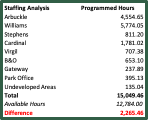
The final unconstrained budgets provide detailed costs based on USACE asset types, position level(s) performing the work, estimated completion time, and recommended maintenance frequencies based on a three-tiered maintenance system. The USACE can use the information to examine existing budget targets and service levels to determine operational efficiencies and needed adjustments in terms of staffing, service levels, maintenance standards, and budget requests.

Reference
Ryan Hartwig, Recreation Program Manager
US Army Corps of Engineers
(404) 275-5589
ryan.d.hartwig@usace.army.mil
60 Forsyth Street SW
Atlanta, GA 30303

Lexington, MA Maintenance and Operations Study (2022)

Why

The 2020 Community Needs Assessment identified a need to conduct an Athletics Field Feasibility Study. In 2021, Lexington Recreation and Community Programs (LRCP) began developing the study; however, there was a need to also examine the larger maintenance and operations practices performed annually because athletic field maintenance (and general park maintenance) involves Department of Public Works (DPW) along with other entities. Therefore, a study was requested to coincide with the Athletics Field Feasibility Study to coordinate field improvements with maintenance and operations considerations.

HOW

Zec Eight Insights analyzed all LRCP athletic fields for playability, use, existing field allocation, and existing maintenance standards implementation. A time-task analysis was conducted that developed and documented the cost associated with maintaining the system’s athletic fields based on staff time. A utilization analysis was conducted that analyzed existing use data provided by LRCP. The analysis sought to discover usage trends including, but not limited to, seasonal use, time of day, day of the week, individual field, user group, sport/activity, length of stay, and fees. A maintenance workshop was held to verify staff findings and to collect context around maintenance and operations practices and procedures.

What

The utilization analysis was combined with the maintenance standard development process to arrive at a final understanding of the requirements to maintain the existing system while providing insight into future athletic field development and field allocation implications. In all, 14 strategies outline key focus areas related to everything from work order management system use to forecasting maintenance and operations costs to tactics for enhancing field conditions, and everything in between.

Reference
Melissa Termine Battite, Director
Town of Lexington Recreation and Community Programs
(781) 698-4801
mbattite@lexingtonma.gov
39 Marrett Road
Lexington, MA 02420

Brownsburg, IN Maintenance Management Plan Update (2022)

Why

Brownsburg Parks created its initial Maintenance Management Plan in 2017. Five years later, and the department continues to serve a fast-growing community and is continually striking a balance between park land acquisition and development. As a result, Brownsburg Parks was in need to update its plan to incorporate new properties, train a new park staff, and update and validate system unit costs.

HOW

Zec Eight Insights updated the Maintenance Management Plan by focusing on five specific tasks:

  1. Establishing and articulating Brownsburg Parks’ primary operations and maintenance functions;
  2. Developing a comparison between Brownsburg Parks and best practice data/organizations;
  3. Conducting a data analysis utilizing FacilityDude actuals;
  4. Determining the appropriate decision matrix/guide for contracting operations and maintenance services and moving toward more “specialized” services; and
  5. Assisting with projecting maintenance costs for new properties and features.

What

The final Maintenance Management Plan Update provides unit costs based on over 2,000 analyzed work orders, separated by location, work order category (such as planned maintenance, vandalism, etc.), and year. A custom decision matrix is provided to help Brownsburg Parks decide when to contract maintenance services. Additionally, enhanced administrative functional help is created and outlined by changing internal reporting, documentation, and quality assurance/quality control (QA/QC) methods. This is done to prepare for the department’s work order system change to Asset Essentials.
Reference
Amber Lane, Director
Brownsburg Parks
(317) 858-4172
alane@brownsburgparks.com
402 E Main Street
Brownsburg, IN 46112

Ocean County, NJ Maintenance Management Plan (2022)

Why

Ocean County Parks oversees over 31,000 acres of park land, trails, greenways, beaches, and conservation lands. With a $7.2 million budget for daily operations and equipment needs and $3.2 million for capital improvement costs, personnel costs account for 86% of the total operational and capital budget. This figure is approximately 41% higher than the national average (45%). Ocean County Parks experienced difficulty in investing in maintenance and operations and felt overextended to take care of the system properly. Therefore, they sought the development of a Maintenance Management Plan to better understand their financial and operational situation and outline a path forward.

HOW

Zec Eight Insights partnered with PROS Consulting to develop the Maintenance Management Plan. Zec Eight Insights conducted a system-wide park assessment that examined existing maintenance practices, operational procedures, and the type of recreational inventory contained within the system (as the type of amenities and facilities directly relate to how maintenance and operations should be planned). Additionally, a detailed work order analysis was performed to produce unit costs for maintaining acres, amenity types, locations, and more. The calculations also involved a time-task analysis that worked with staff to track time across various required maintenance and operations functions and park site locations.

What

The Maintenance Management Plan outlines a fundamental shift in maintenance and operations philosophy. It was determined that a tiered approach to maintenance was necessary in order to maximize the existing budget. Additionally, maintenance standards were developed along with financial implications/considerations so Ocean County Parks can enact changes to help their bottom line now and into the future.

Reference
Michael Mangum, Director
Ocean County Department of Parks & Recreation
(732) 506-9090
mmangum@co.ocean.nj.us
1198 Brandon Road
Toms River, NJ 08753

Rhode Island Recreation and Parks Association Strategic Plan (2023)

Why

The Rhode Island Recreation and Parks Association (RIRPA) is a professional association serving the park and recreation profession within Rhode Island. RIRPA members include directors, superintendents, managers, frontline staff, other professional staff, elected officials, active citizens, and commercial vendors. With no dedicated full-time staff, RIRPA is managed by a Board of Directors, each serving two-year terms. Since working professionals are responsible for RIRPA’s governance, it was extremely important to create a Strategic plan to outline how RIRPA should advance its operations to align more closely with other state associations.

How

Zec Eight Insights facilitated Board of Director workshops and implemented a membership survey as part of the process. The planning process culminated with a new vision, mission, and guiding values statements.

What

Designed to be valid from 2023-2027, the final Strategic Plan contains 23 objectives organized into four strategic categories:

  1. Enhance RIRPA Awareness and Brand
  2. Increase Organizational Support and Operations
  3. Formalize Processes and Procedures
  4. Enhance Membership Offerings

Reference
Ray DeFalco, Director
Jamestown Parks and Recreation
(401) 423-7266
rdefalco@jamestownri.net
41 Conanicus Avenue
Jamestown, RI 02835

Dakota County, MN Park Ordinance Update (2022)

WHy

Park Ordinances are the overarching rules and regulations for a particular park system. Dakota County’s Ordinance 107 (Park Use) was enacted in 1997 and many years elapsed since revisiting it. Since this time, many changes occurred in technology and the way that visitors use County parks and greenways. The gaps between coverage in the Ordinance and new activities, as well as arising safety or social issues, created a level of uncertainty and confusion for staff tasked with education around and enforcement of park rules.

How

Zec Eight Insights was hired to update Dakota County Ordinance 107 (Park Use). The County approved a multi-phase project in 2018 to update the Ordinance. Phase 1, completed in September 2019, was conducted by the Office of Performance and Analysis (OPA) in conjunction with the Parks Department. It included conducting background research and providing a summary of pertinent topics and potential recommendations for revision.

Zec Eight Insights created a customized approach to updating the Park Ordinance and implemented the following process:


  • Conducted a stakeholder analysis to identify key stakeholders and determine necessary engagement throughout the project;
  • Developed a Public Engagement Plan and conducted public engagement;
  • Drafted a revised Ordinance for comprehensive County review; and
  • Assessed communication needs and made recommendations on the content/format of the new Ordinance and supporting materials.

What

Phase 2 of the Ordinance Update resulted in the development of a revised Ordinance presented to the County Board for adoption. The final Ordinance meets three identified project objectives:

  1. The Ordinance should be contemporary and dynamic;
  2. The Ordinance should recognize system inequalities and substantially advance inclusion; and
  3. The Ordinance should be easy for the County to communicate and easy for users to understand.

Reference (current contact information)
Jeff Bransford, PMP, CPRE
Park Development Manager
(830) 221-4358
jbransford@newbraunfels.gov
110 Golf Course Road
New Braunfels, TX 78130

Memphis, TN CAPRA Accreditation Consultant (2024)

Why

The National Recreation and Park Association (NRPA) Commission for Accreditation of Park and Recreation Agencies (CAPRA) delivers quality assurance and improvement to accredited park and recreation departments throughout the United States. This operational management system improves their infrastructures; increases efficiency in all activities; and demonstrates accountability within their communities. Implementation of this system strengthens teamwork among department staff, imbeds all aspects of CAPRA into their department’s internal culture, and establishes a continuous improvement mindset for all department activities.

CAPRA is the only national accreditation of park and recreation departments and is a valuable measure of a department’s overall quality of operation, management, and service to the community. Achieving CAPRA accreditation is the best way to demonstrate that your department and your staff provide your community with the highest level of service.

HOW

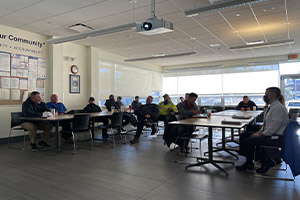
Zec Eight Insights was hired to provide consultation, project management, and support for Memphis Parks’ attempt to become a CAPRA accredited parks system. Zec Eight Insights conducted an all staff meeting in September 2022 to formally kick-off the CAPRA process. Staff members were organized into chapter teams, each with a leader or co-leader. Over the course of 2023 and into 2024, Zec Eight Insights reviewed and assessed evidence of compliance (EOC), facilitated staff workshops and meetings, and provided overall guidance for the CAPRA accreditation process.

What

Memphis Parks received accreditation during the spring 2024 visit season, becoming only the third agency from Tennessee to achieve this status.

Reference
Amy Collier, CPRP
Development Manager
(901) 636-4206
amy.collier@memphistn.gov
2599 Avery Avenue
Memphis, TN 38112

Why

For the fifth consecutive decade, Hamilton County, Indiana remained the fastest growing Indiana county
in 2020 (with a 26.5% population increase). The county is also home to strong local municipal parks and
recreation departments. As a result, Hamilton County residents are accustomed to a high level of service

and quality of life expectations. Hamilton County Parks and Recreation (HCPR) desired to update its Five-
Year Master Plan to be eligible for the Land and Water Conservation Fund monies established by

Congress in 1964. HCPR sought to create a more robust land acquisition strategy, identify new funding
and revenue considerations, and create a plan that provides direction for operations and maintenance.

How

Zec Eight Insights partnered with Lehman & Lehman along with ETC Institute. Lehman & Lehman is a
landscape architect firm located in Mishawaka, IN. They provided their expertise in park assessments,
mapping, and assistance with the overall plan’s development. ETC Institute is based in Olathe, KS and is
recognized as an industry leader in community market research. They provided their expertise in
statistically-valid surveying which resulted in 600 collected responses with a precision rate of +/- 4% at
the 95% level of confidence.

What

The final Master Plan provides an updated land acquisition plan/policy,
baseline for establishing staffing standards, funding and revenue guidelines to
help fund the system, identified capital improvement projects by park location,
and an implementable action plan with a phased approach over the five-year
planning period. The plan is a direct result of a large internal and external
engagement process coupled with technical assessments and research.

Reference

Chris Stice, Director
Hamilton County Parks and Recreation Department
(317) 770-4400
chris.stice@hamiltoncounty.in.gov
400 Lafayette Road
Noblesville, IN 46060